

Tulsa home price reductions are becoming harder to ignore. In October 2026, 24.3% of active Tulsa metro listings had a price reduction, compared with 20.5% nationally, according to Realtor.com's October housing report. That's nearly one in four homes on the market.
If you've been looking at homes around Tulsa, you may have noticed more listings showing lower asking prices. And if you're thinking about buying, you might be wondering whether this means sellers are becoming more willing to negotiate.
It's a fair question, but there's something important to understand. A price reduction doesn't automatically mean you're getting a good deal. Sometimes a home was priced too high from the beginning. Other times, the seller may be responding to competing listings, a longer selling timeline, or changes in buyer interest.
I'm Jessica A. Ford with Chinowth & Cohen REALTORS®, and I believe knowing why a home has been sitting on the market is just as important as knowing its asking price. Whether you're looking in Tulsa, Broken Arrow, Owasso, or Bixby, understanding the numbers can help you make a more informed decision.
Let's look at what these changes could mean for buyers and how to approach negotiations without getting caught up in the excitement of a price reduction.
What Are Tulsa Home Price Reductions Really Telling Us?
More sellers are adjusting their asking prices, but that doesn't necessarily mean Tulsa home values are dropping across the board.
According to Realtor.com's October 2026 report, the median listing price in the Tulsa metro was approximately $325,000, essentially unchanged from the previous year. At the same time, nearly one in four active listings had experienced a price reduction.
Those numbers tell two different parts of the story.
A listing price is what a seller hopes to receive, while the eventual sale price reflects what a buyer and seller actually agree upon. A seller might initially list a home above what comparable properties support, then reduce the asking price after seeing how buyers respond.
Imagine a home that was originally listed for $375,000 and is now advertised for $355,000. That $20,000 reduction might catch your attention, especially if you've been watching the property for a while. But if similar homes nearby have recently sold for $345,000, the new asking price may still be higher than the current market supports.
On the other hand, a home that hasn't reduced its price could already be priced competitively.
This is why I encourage buyers to look beyond the price-reduction label. Recent comparable sales, property condition, location, and available competition give us a much better picture of whether a home represents good value.
The goal isn't simply to find a reduced price. It's to understand what the home is worth in today's market.
Not Every Tulsa Home Has the Same Negotiating Room
One of the biggest things buyers should know is that the Tulsa housing market isn't moving at the same pace in every price range. Some homes still attract strong interest, while others face more competition from similar properties.
The October 2026 Tulsa County housing report, using Greater Tulsa Association of REALTORS® MLS data, showed approximately 3.59 months of housing supply overall. However, inventory varied considerably depending on the price range.
Homes priced at or below $375,000 generally had between 2.69 and 3.30 months of supply. That increased to 4.47 months for homes priced between $375,001 and $500,000, 5.04 months between $500,001 and $675,000, and 6.39 months above $675,000.
So, what does that mean if you're buying?
If you're looking for a well-maintained, reasonably priced home around $250,000, you may still encounter competition from other buyers. But if you're searching for a higher-priced property in South Tulsa, Bixby, or Broken Arrow, you might have more options to compare before making a decision.
Of course, these figures describe Tulsa County as a whole. They don't tell us exactly how competitive a particular neighborhood or property will be.
A home with updated finishes, a desirable layout, and an attractive location might sell quickly even in a price range with more inventory. Meanwhile, another home nearby may sit longer because of its condition, layout, or asking price.
That's why I wouldn't recommend using the same negotiation strategy for every property. What makes sense for one home may not make sense for another, even if both have similar asking prices.
A Home That's Been Listed Longer Deserves a Closer Look
Have you ever found a beautiful house online and wondered why it hasn't sold yet?
It's easy to assume that something must be wrong with it, but that's not always the case. A home can spend more time on the market for several reasons, including an ambitious original asking price, limited buyer interest in a particular price range, or competition from newer listings.
According to Realtor.com, active Tulsa metro listings had a median of 64 days on the market in October 2026, approximately 10% longer than a year earlier. That suggests some buyers have more time to consider their options, but it doesn't mean every home listed for 45 or 60 days is overdue for a price reduction.
What matters more is how long the home has been listed compared with similar properties in the same area and price range.
For example, imagine finding a home in Owasso that's been listed for 70 days, while comparable properties nearby have been selling much faster. That might be worth investigating. Perhaps the seller has already made a price adjustment, or the home needs updates that buyers are factoring into their offers.
Instead of immediately assuming the seller will accept a lower price, I'd want to review the listing history, recent comparable sales, and the property's condition. I'd also look at how many similar homes are currently available.
Sometimes those details reveal an opportunity for a reasonable offer. Other times, they explain why a home hasn't sold and help you decide whether it's worth pursuing at all.
A longer listing period is a reason to ask better questions, not automatically a reason to make a low offer.
Sometimes the Best Negotiation Isn't About the Purchase Price

When most people think about negotiating a home purchase, they picture offering less than the asking price. And sometimes, that's exactly what makes sense.
But depending on your financial situation, negotiating other terms may be just as valuable.
One option is requesting seller-paid closing costs. Rather than reducing the purchase price, a seller may agree to contribute toward certain eligible expenses associated with your mortgage and closing.
According to Fannie Mae's interested-party contribution guidelines, seller contributions can be used for eligible closing expenses, subject to limits based on the financing arrangement. They generally cannot be used to satisfy the buyer's required down payment.
Here's an example of why this matters.
Let's say you're considering a home listed at $350,000. One possible negotiation is an accepted purchase price of $340,000 with no seller assistance. Another is a $350,000 purchase price with a $10,000 seller contribution toward eligible closing costs.
The first option gives you a lower purchase price, which may reduce your loan amount and long-term borrowing costs. The second could help you keep more cash available at closing, assuming the credit is permitted by your loan program and you have sufficient eligible expenses.
Neither option is automatically better. The right choice depends on your down payment, financing, available cash, and how long you expect to own the home.
The Consumer Financial Protection Bureau recommends comparing Loan Estimates so buyers can evaluate monthly payments, closing costs, and the overall cost of borrowing before making a decision.
Could a mortgage-rate buydown help?
Another possibility is using an eligible seller contribution toward a mortgage-rate buydown.
With a temporary 2-1 buydown, the buyer's payment is calculated using a rate two percentage points below the loan's note rate during the first year and one percentage point below during the second year. Beginning in the third year, payments are based on the full note rate.
That temporary relief can be useful for some buyers, but it's important to understand that the mortgage's underlying interest rate doesn't permanently change.
Under Fannie Mae's temporary interest-rate buydown guidelines, qualifying borrowers must still meet the lender's requirements using the full note rate.
This is where having a conversation with your lender can make a difference. Before asking a seller for a specific concession, it's worth understanding which option would actually benefit you financially.
The best negotiation isn't always the one that produces the lowest purchase price. It's the one that makes the most sense for your situation.
Know What You're Buying Before You Negotiate
A home that has dropped its price might look more attractive than it did a month ago, but that doesn't mean you should overlook its condition or skip important steps in the buying process.
Tulsa-area buyers may need to investigate issues such as foundation movement, drainage, aging plumbing, roof condition, or other concerns specific to the property. These aren't reasons to automatically avoid a home, but they are reasons to understand what you're purchasing before making a final decision.
For example, imagine a house has been reduced by $15,000, but an inspection reveals significant repair needs. Is the discount enough to make the property a good value? That depends on the scope of the work, realistic repair estimates, and what comparable homes in better condition are selling for.
I encourage buyers to take inspections seriously and bring in qualified specialists when necessary. The Oklahoma Real Estate Commission's residential contract resources address investigations, inspections, and related contractual procedures, but the specific deadlines and options depend on the agreement you've signed.
An appraisal is another consideration. If the property appraises below the agreed purchase price, the buyer and seller may need to discuss possible solutions, depending on the financing and contract terms. However, a low appraisal doesn't automatically require the seller to reduce the price.
When you're negotiating, it's easy to focus on getting a lower number. I think it's equally important to consider what the home may cost you after closing, including repairs, insurance, taxes, and maintenance.
A purchase price is only one part of the financial picture.
What I'd Want Tulsa Buyers to Remember Before Making an Offer
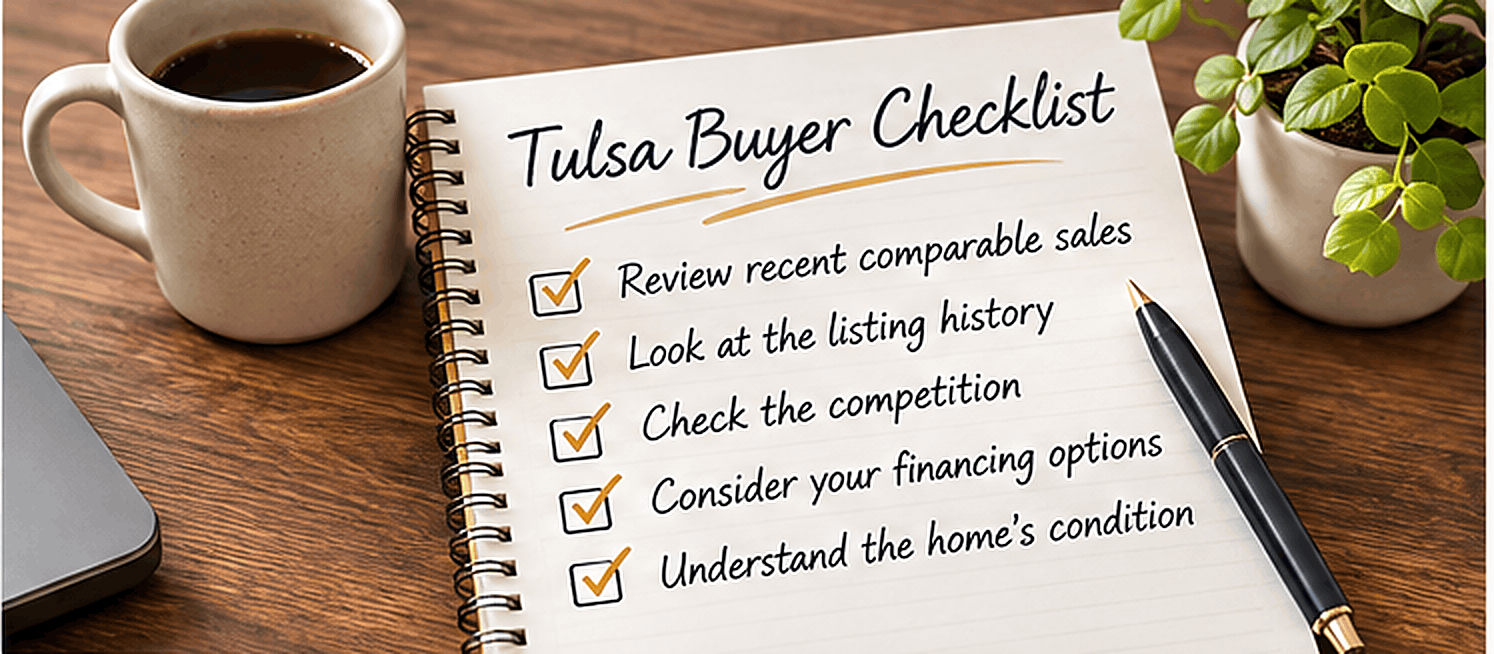
With more price reductions appearing in the Tulsa market, buyers may have opportunities that weren't as common during periods of intense competition. But that doesn't mean every seller is desperate or that every reduced listing is a bargain.
Before making an offer, I'd encourage you to consider a few things:
Look at recent comparable sales, not just the original asking price.
Review the listing history to understand how the property has been marketed.
Consider the competition in that neighborhood and price range.
Think about your financial priorities, including closing costs and your monthly payment.
Understand the home's condition before deciding what you're comfortable paying.
Most importantly, remember that you don't have to use the same strategy on every home.
Sometimes making a strong offer at asking price is reasonable. Other times, a lower offer or a request for seller concessions may be worth exploring. And occasionally, the smartest decision is to keep looking.
The Bottom Line for Tulsa Homebuyers
Nearly one in four active Tulsa metro listings had a price reduction in October 2026. That's worth paying attention to, but it doesn't tell the whole story.
Some sellers are adjusting their expectations, and some buyers may have more room to negotiate. Still, the best opportunities depend on the individual property, the surrounding market, and the terms that matter most to you.
If you're looking at homes in Tulsa, Broken Arrow, Owasso, or Bixby and wondering whether there's room to negotiate, I'd love to help you look at the numbers and understand your options.
Because the goal isn't just to pay less. It's to feel confident about the home you're buying.
Jessica A. Ford
Chinowth & Cohen REALTORS®
Frequently Asked Questions About Tulsa Home Price Reductions
Does a price reduction mean a Tulsa seller is willing to negotiate?
Not necessarily. A reduction tells you the seller has adjusted the asking price, but it doesn't tell you how much flexibility remains. Some sellers may be open to discussing additional concessions, while others may consider the updated price firm. Reviewing comparable sales and the property's listing history can help you decide how to approach an offer.
Is Tulsa becoming a buyer's market?
Market conditions vary by neighborhood and price range. October 2026 data showed 3.59 months of housing supply in Tulsa County, with considerably more inventory among higher-priced homes. That may give some buyers more choices, but it doesn't mean every listing has significant negotiating room. Looking at your specific price range will provide a clearer picture.
Should I offer below asking price on a home that's been listed for 60 days?
Possibly, but days on market alone shouldn't determine your offer. Compare the home's asking price with recent sales, its condition, and how quickly similar properties are selling nearby. A property that's been listed longer may present an opportunity, but a well-priced home can still attract strong interest.
Is it better to negotiate closing costs or a lower purchase price?
It depends on your financing and financial goals. A lower price may reduce your loan amount and long-term costs, while eligible closing-cost assistance can reduce the cash needed at closing. Your lender can help compare the options and confirm which seller contributions are allowed under your loan program.
