

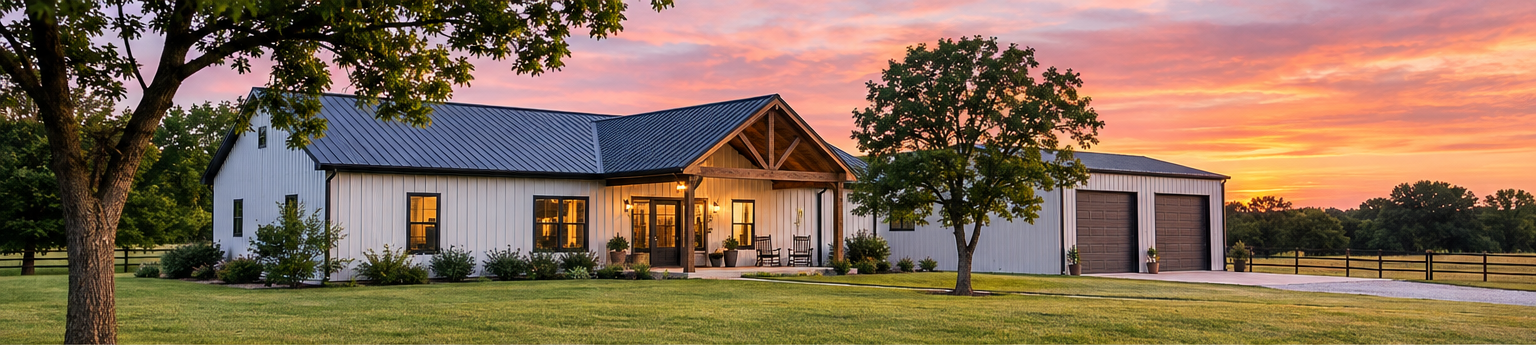
Tulsa acreage deed restrictions can limit what you build and how you use your property, even when there's no homeowners association.
Here's what might surprise you: A deed restriction recorded more than 40 years ago could still affect what you're allowed to do with land you buy today.
Imagine finding 10 beautiful acres outside Owasso, Bixby, or Collinsville. You're already picturing your dream home, a large metal shop, maybe a few horses, and an RV to live in while you're building.
The listing says "No HOA." Perfect, right?
Not necessarily.
What if a restriction recorded in 1984 prohibits metal buildings, limits livestock, or prevents you from living in an RV on the property?
I'm Jessica, and when you're shopping for acreage around Tulsa, I want you to understand exactly what you're buying. Because finding the perfect piece of land isn't just about acreage and location. It's about making sure the property actually works for your plans.
Let's look at what buyers need to know before purchasing rural property in the Tulsa area.
The Hidden Restrictions on Tulsa-Area Acreage
One of the biggest misconceptions about rural property is that no HOA means no rules.
In Oklahoma, private deed restrictions can exist without an active homeowners association, annual dues, or a neighborhood board.
These restrictions, often called restrictive covenants, are recorded agreements that limit or regulate how certain properties can be used.
According to the Oklahoma Bar Association's explanation of residential restrictive covenants, these restrictions can be established through deeds, subdivision plats, or other recorded documents. When validly established, they may continue to bind future property owners.
That's especially important for buyers looking at acreage in Tulsa, Owasso, Broken Arrow, Bixby, Collinsville, and surrounding communities.
A listing might advertise "No HOA," "Country Living," or even "Unrestricted Land."
But those descriptions don't replace checking the property's recorded documents.
The takeaway: No HOA doesn't automatically mean no restrictions.
How 40-Year-Old Covenants Can Still Control Your Property

Imagine a landowner divided 160 acres into smaller tracts back in 1984.
To establish standards for the properties, the owner recorded restrictions addressing home sizes, exterior materials, livestock, and detached buildings.
Forty years later, the original owner might be gone. The land may have changed hands several times. Perhaps no HOA was ever established.
Yet those recorded restrictions may still apply.
The Oklahoma Bar Association explains that restrictive covenants can run with the land. In practical terms, that means the obligations may continue when ownership changes, rather than disappearing when the original owner sells.
For Tulsa-area acreage buyers, this is why a property's history matters.
What looks like an independent rural tract today may still be subject to an older development's recorded restrictions.
And just because the document looks outdated doesn't automatically make it unenforceable.
Can a Neighbor Enforce Deed Restrictions Without an HOA?
Yes. Under certain circumstances, an individual property owner can take legal action to enforce recorded restrictions, even without an active HOA.
Under Oklahoma Statute 60 O.S. § 856, an owner within a qualifying real estate development may bring an action to enforce applicable restrictions against another owner in that development. The law also provides for the prevailing party in a qualifying enforcement action to recover reasonable attorney fees, as determined by the court.
Consider this hypothetical situation.
You buy acreage near Collinsville and start building a large detached workshop.
A neighboring property owner points out a recorded restriction limiting detached metal buildings.
If that restriction is valid and the neighbor has enforcement rights, the disagreement could become more than an uncomfortable conversation.
Depending on the circumstances, litigation could lead to a court order affecting construction, along with legal expenses.
This doesn't mean every nearby landowner can enforce every restriction. The development, recorded documents, and applicable law matter.
My advice? Know what the recorded restrictions say before spending money on construction.
Barndominiums, Metal Shops, RVs, and Livestock: The Restrictions That Matter
Many buyers searching for Tulsa acreage aren't looking for just another house.
They want room to create a lifestyle that works for them.
Maybe that's a barndominium with an attached garage, a workshop for restoring cars, enough room for horses, or an RV setup while building.
But older covenants may conflict with those plans.
Here are examples of restrictions buyers should watch for:
| Your Plans | Possible Restriction |
|---|---|
| Metal barndominium | Brick or masonry exterior requirements |
| 40×60 metal shop | Restrictions on size, placement, or materials |
| RV while building | Prohibition on temporary residential occupancy |
| Horses or chickens | Livestock and poultry restrictions |
| Small custom home | Minimum heated square footage |
| Guest house | Limits on additional residences |
These are examples of possible covenant provisions, not restrictions verified for a specific Tulsa-area property.
And private covenants aren't the only consideration. The Tulsa County Zoning Regulations also address land uses and building requirements in unincorporated Tulsa County, with certain exceptions.
Here's another important point: Just because your neighbor has a metal shop doesn't necessarily mean you can build one.
Perhaps the neighboring property has different restrictions. Maybe an exception or amendment applies. Or the existing structure may be inconsistent with a covenant that hasn't been enforced against that owner.
Visible violations don't automatically establish that a restriction has been legally abandoned or waived.
Before purchasing, get the applicable documents reviewed rather than relying on what neighboring properties appear to permit.
Do Oklahoma Deed Restrictions Ever Expire?
Some do. Others contain automatic renewal provisions or remain effective under applicable law.
One common assumption is that deed restrictions automatically disappear after 20 or 30 years.
That isn't a reliable rule in Oklahoma.
Older declarations may establish an initial period followed by automatic extensions unless the owners take the required steps to amend or terminate them.
Oklahoma also has a Marketable Record Title Act. However, 16 O.S. § 76 expressly protects certain use restrictions and area agreements that are part of a subdivision-development plan from being extinguished through that act.
Can old covenants be changed?
Sometimes.
The recorded declaration may include an amendment procedure. Oklahoma law also provides a statutory amendment process for certain residential additions.
Under 11 O.S. § 42-106.1, qualifying restrictive covenants may be amended with approval from at least 70% of parcel owners after 10 years, or 60% after 15 years, subject to statutory requirements and any lower percentage specified in the covenant.
That process doesn't necessarily apply to every rural acreage tract.
If an old restriction affects your plans, an Oklahoma real estate attorney can help determine whether it remains enforceable and what options are available.

Tulsa Zoning and Private Deed Restrictions Are Different
Here's another detail acreage buyers shouldn't overlook.
Zoning regulations and private deed restrictions are separate legal requirements.
Zoning is established by government authorities. Private deed restrictions generally come from recorded property agreements.
Both can affect what you're allowed to build.
As the Tulsa Planning Office explains, zoning regulates property uses and development standards, including matters such as building heights and setbacks. The office recommends reviewing zoning and other land-use information before purchasing property you intend to develop.
Within Tulsa city limits, the city's zoning regulations apply. Unincorporated Tulsa County also has its own zoning regulations, with specified exceptions.
For example, a metal workshop might be permitted under the applicable zoning regulations but prohibited by a private deed restriction.
The reverse can also happen.
Remember, a Tulsa mailing address doesn't always mean a property is within Tulsa city limits.
If you're buying land outside Owasso, Broken Arrow, Bixby, or Collinsville, confirm the property's actual jurisdiction and applicable rules.
Being outside city limits doesn't automatically make land unrestricted.
How to Find Deed Restrictions Before Buying Tulsa Acreage
The good news is that you can investigate these issues before purchasing.
Here are the steps I encourage acreage buyers to take.
1. Request the recorded restrictions
Ask the title company for copies of all recorded restrictions affecting the property.
Under Oklahoma Statute 60 O.S. § 857, the title company closing a sale within a covered real estate development must provide the buyer with copies of recorded covenants and restrictions, either before or at closing.
My recommendation is to request them well before closing, while you still have time to review your options.
2. Review the title commitment
Pay particular attention to Schedule B and any references to recorded covenants, easements, building lines, or subdivision restrictions.
Request the underlying documents rather than relying on brief summaries.
3. Check County Clerk land records
Depending on the property's location, relevant documents may be recorded in Tulsa, Rogers, Wagoner, Creek, or another county.
Older restrictions may appear in deeds or documents associated with the original tract.
4. Verify your building plans
Contact the appropriate planning, zoning, and permitting authorities.
Be specific about what you want to build, including size, materials, location, and intended use.
If you need certainty about the effect of private restrictions, seek legal guidance.
5. Understand your contract deadlines
The Oklahoma Real Estate Commission's contract resources include a Vacant Lot or Tract form and other contracts addressing inspections, surveys, utilities, zoning, and land-use considerations.
Your actual contract determines which deadlines and rights apply to your purchase.
Jessica's Tulsa Acreage Buyer's Checklist
Before committing to rural land, make sure you've investigated the essentials.
Confirm the property's zoning and jurisdiction.
Obtain and review recorded deed restrictions.
Check whether barndominiums and metal workshops are allowed.
Verify requirements for RVs, manufactured homes, and guest houses.
Review livestock restrictions.
Investigate easements, legal access, utilities, and wastewater options.
Confirm building setbacks and permit requirements.
Understand title objections and contract deadlines.
Get professional guidance on unresolved legal questions.
The goal isn't to complicate your land search. It's to avoid surprises after you've purchased the property.
Buying Tulsa Acreage? Make Sure the Land Fits Your Plans
Owning acreage around Tulsa can be an incredible opportunity to build the home and lifestyle you've imagined.
But beautiful land isn't necessarily the right land.
When you're considering property in Owasso, Collinsville, Bixby, Broken Arrow, or the surrounding countryside, I want you to think beyond the listing photos.
Can you build the home you want? Is your workshop permitted? Can you keep the animals you've planned for?
Those are questions worth answering before closing.
Thinking about buying acreage around Tulsa? Contact Jessica before you buy. Let's talk about your plans and start looking for land that fits what you want to build and how you want to live.
Frequently Asked Questions About Tulsa Acreage Restrictions
Can a neighbor enforce deed restrictions without an HOA?
Yes, potentially. Under Oklahoma Statute 60 O.S. § 856, individual owners within qualifying real estate developments may enforce applicable recorded covenants. An active HOA isn't always required. Enforcement rights depend on the development, documents, and applicable law.
Can I build a barndominium on rural property near Tulsa?
Possibly, but verify both private restrictions and government regulations before purchasing. Some covenants limit exterior materials, building types, or minimum square footage. A qualified professional can help you evaluate whether your plans fit the property.
Do Oklahoma deed restrictions expire after 30 years?
Not automatically. Some restrictions contain expiration dates or renewal provisions, while certain subdivision-related restrictions are protected under Oklahoma's Marketable Record Title Act, as explained in 16 O.S. § 76. Their enforceability depends on the documents and applicable law.
What if I discover deed restrictions after buying land?
Start by obtaining the recorded documents and discussing your situation with an Oklahoma real estate attorney. Whether the restrictions apply and what remedies may be available depend on the circumstances. Avoid beginning potentially prohibited construction until you understand your legal position.
