


Buying land near Tulsa can be an exciting first step toward building your dream home, but not every beautiful piece of acreage is ready for construction.
Here's the surprise: You could buy five or ten acres and still discover that the place you planned to build isn't suitable or legally available for your home.
Imagine finding a gorgeous property near Coweta, Inola, Claremore, or the outskirts of Owasso. The land has mature trees, rolling hills, and plenty of space for the house you've always imagined.
You can already picture the driveway, the front porch, and the peaceful evenings away from crowded neighborhoods.
But before you start designing the house, there's a much more important question:
Can you actually build what you want on that land?
I'm Jessica A. Ford with Chinowth & Cohen REALTORS®, and I want buyers to understand that purchasing vacant land is different from buying an existing home. With acreage, you're not just evaluating what's there today. You're also investigating what the property will allow you to create.
Here are seven things Tulsa-area land buyers should investigate before making that commitment.
1. The Septic Test Can Change Your Building Plans
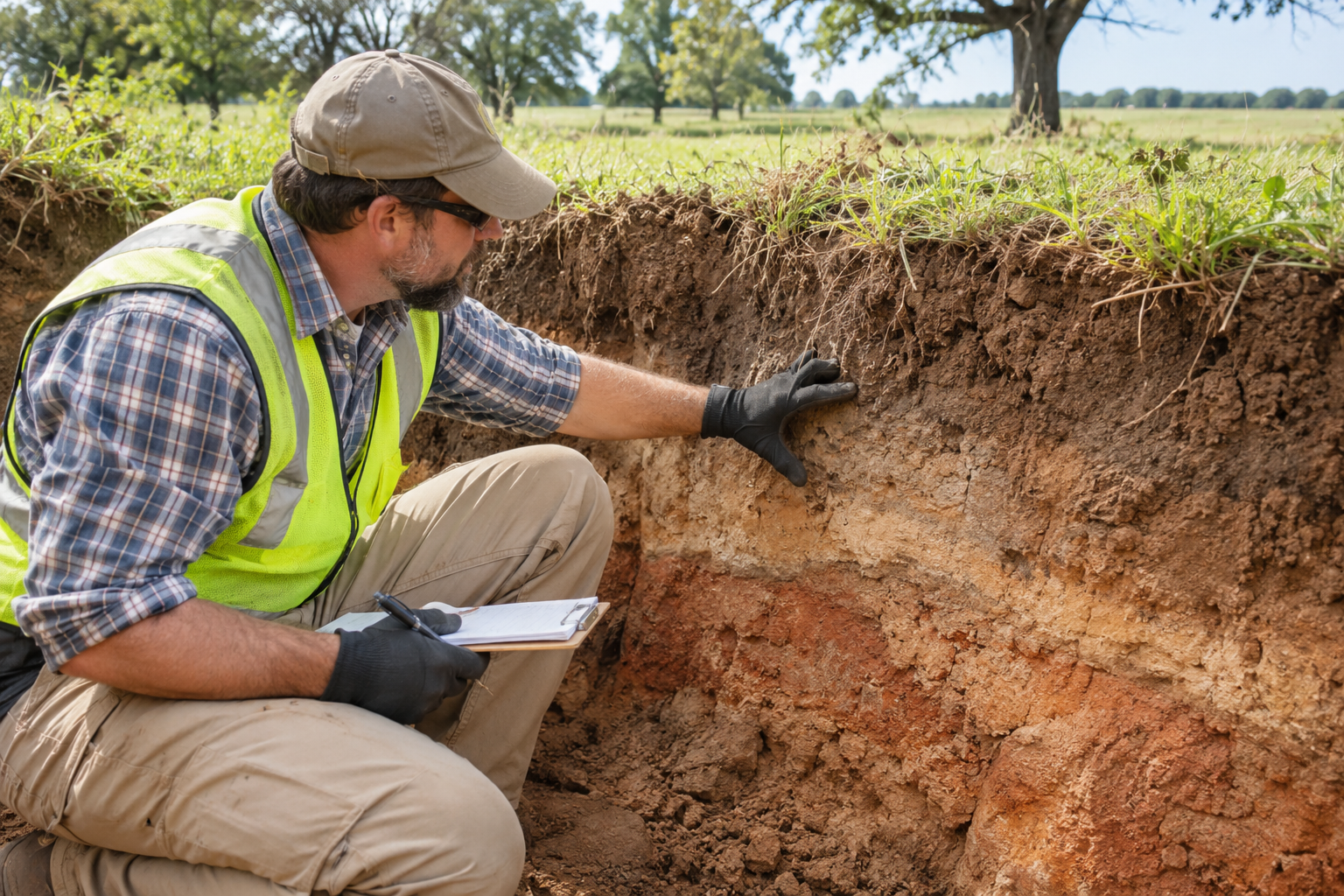
Soil conditions can determine whether a conventional septic system will work on your property and what alternatives may be required.
Many rural properties around Tulsa aren't connected to a municipal sewer system. Instead, they need an approved on-site wastewater treatment system.
And that's where the soil beneath your feet becomes incredibly important.
According to the Oklahoma Department of Environmental Quality (DEQ), soil evaluations consider factors such as texture, saturated soil, and depth to rock when determining an appropriate wastewater system.
Why does this matter?
A property may look dry and perfectly suitable for a home, but the soil could contain dense clay, shallow rock, or seasonal groundwater conditions that make a conventional septic system unsuitable.
That doesn't automatically mean you can't build.
Oklahoma permits different types of wastewater systems, including alternatives to conventional subsurface systems. However, those alternatives may require different designs, larger dispersal areas, additional approvals, or ongoing maintenance.
Oklahoma State University Extension explains these differences in its guide to septic system rules in Oklahoma.
Here's something else buyers sometimes overlook: The septic system needs suitable space, too.
You can't assume that every corner of a five-acre parcel is available for your home, driveway, shop, and wastewater system.
Before buying: Ask a DEQ-certified soil profiler to evaluate the proposed wastewater area and discuss the available system options with qualified professionals.
2. Rural Water Is Nearby, but Can You Actually Get a Meter?
A water line running alongside a rural property doesn't guarantee that a new water connection is available.
This is one of the most important questions to ask when buying land outside Tulsa's municipal utility service areas.
Some acreage properties are served by rural water districts, which have their own service boundaries, connection requirements, and infrastructure limitations.
You might see a water line near the road and assume getting service will be easy.
But the district may need to verify whether it can serve your specific parcel.
For example, Rogers County Rural Water District No. 3 requires a property's legal description to determine service availability. Its published procedures also state that a road bore may involve an additional charge.
The district notes that standard installations and those requiring road bores have different expected installation timeframes.
That means "water nearby" isn't the same as "water ready."
And if a connection isn't available, buyers may need to investigate other options, such as a permitted well, depending on local conditions and requirements.
Before buying: Contact the actual water provider, using the parcel's legal description, and ask about service availability, connection fees, extensions, road bores, and estimated installation timing.
Don't rely on a nearby meter or verbal assumptions.
3. A Gravel Driveway Isn't Always Legal Access
Being able to drive onto a property doesn't necessarily mean you have documented legal access to it.
This can be especially important when looking at secluded acreage reached by gravel lanes or roads crossing neighboring properties.
Imagine finding a beautiful tract tucked behind several other parcels. You drive down a gravel road to view it, and everything seems straightforward.
But who owns the road?
Do you have a recorded right to use it?
Who pays for repairs after heavy rain washes out the gravel?
According to Oklahoma State University Extension's explanation of real estate ownership, access rights may arise through easements, including recorded agreements and certain other legal circumstances.
The problem is that physical access and legal access are not always the same thing.
A lender or title company may also have requirements concerning access rights and, in some cases, maintenance arrangements.
Even if legal access exists, an unimproved route might not accommodate concrete trucks, emergency vehicles, or construction equipment without additional work.
Before buying: Review the deed, survey, title documents, recorded access easements, and any private-road maintenance agreements.
If access is uncertain, have an Oklahoma real estate attorney or title professional investigate before you proceed.
4. Pipeline Easements Can Reduce Your Buildable Space
A pipeline or utility easement can limit where you place a home, shop, driveway, or other improvements.
Oklahoma has extensive energy and utility infrastructure, and some rural properties have recorded easements that are easy to overlook.
You might walk a ten-acre property and see nothing but pasture.
Yet an underground pipeline could cross the area where you planned to build.
According to ONEOK's guidance for landowners, pipeline rights-of-way must remain free from buildings, trees, and other obstructions that could interfere with inspection, maintenance, or safe operation.
That's significant because a pipeline easement may reduce the portion of your property available for development.
And pipelines aren't the only concern. Electric transmission lines, utility easements, drainage easements, and other recorded rights can also affect your plans.
The exact limitations depend on the easement documents and the utility or pipeline operator's requirements.
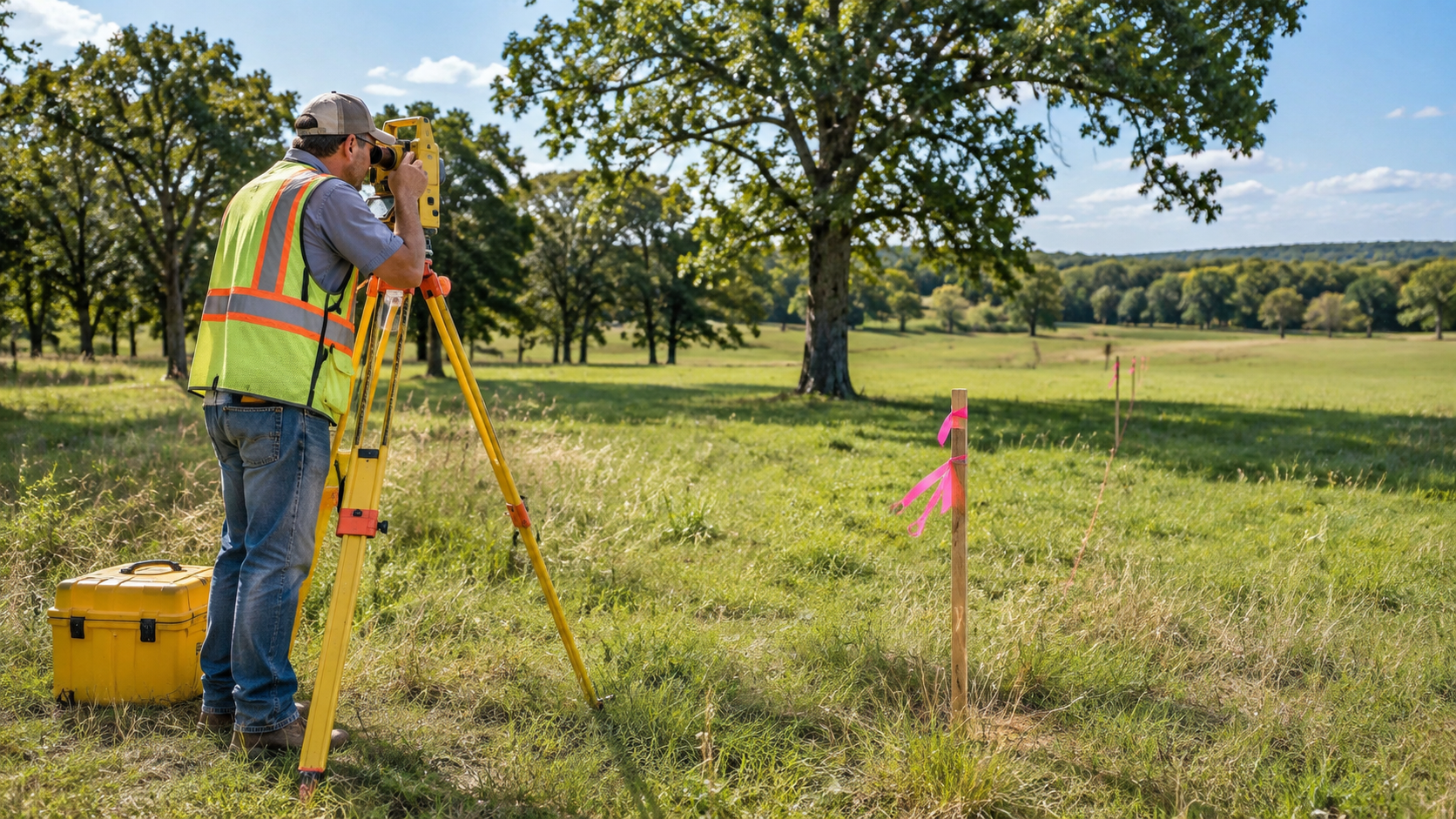
Before buying: Request the title commitment, obtain copies of recorded easements, and have a surveyor help identify their locations.
If an easement affects your proposed building site, contact the easement holder before committing to construction plans.
5. Why FEMA Flood Maps Don't Tell the Whole Story in Tulsa
A property outside a FEMA high-risk flood zone can still experience flooding or face local drainage restrictions.
This is particularly important for Tulsa-area buyers.
A parcel might appear to have low flood risk when you check a national flood map, but that doesn't necessarily reveal every local drainage concern.
According to the National Flood Insurance Program's flood-zone guidance, some areas classified as having minimal flood hazard can still experience ponding or drainage problems.
Tulsa has another layer of information that buyers should understand.
The City of Tulsa maintains its own Regulatory Floodplain Map Atlas to identify flood hazard areas regulated by the city.
In the city's floodplain planning documents, Tulsa explains that its regulatory mapping extends upstream to drainage areas of approximately 40 acres, compared with the approximately 640-acre drainage threshold described for typical FEMA special flood hazard mapping.
That's a major difference.
A small creek, drainage corridor, or low area can affect where development is permitted, even when the property looks appealing during a dry-weather showing.
Keep in mind that Tulsa's specific regulatory maps and standards shouldn't be assumed to apply throughout every neighboring county or municipality.
Before buying: Check FEMA maps and the floodplain or drainage information maintained by the jurisdiction governing the property. If necessary, consult a surveyor or drainage engineer about your proposed homesite.
6. Old Deed Restrictions Can Still Limit New Construction
A property can have no active homeowners association and still be subject to recorded restrictions on what you can build.
If you've read my previous article about deed restrictions, you already know this is something I encourage acreage buyers to take seriously.
Imagine buying land near Collinsville or Coweta because you want a custom home, a large metal workshop, and space for animals.
The listing says "No HOA."
That sounds promising.
But what if the property is part of an older development with recorded restrictions limiting building materials, home sizes, or certain land uses?
Those documents may still matter, even decades after they were recorded.
Under Oklahoma Statute 60 O.S. § 856, owners within qualifying real estate developments may have the right to enforce applicable recorded covenants against other owners in the same development.
That doesn't mean every old restriction is enforceable or that every neighbor has the same rights. Those questions depend on the documents and applicable law.
Still, no HOA is not proof that land is unrestricted.
Before buying: Request the recorded covenants and restrictions early. If their meaning or enforceability is unclear, ask a qualified Oklahoma real estate attorney to review them.
7. The Driveway Permit and Culvert Surprise
A property may have road frontage but still require an approved driveway location, drainage structure, or other access improvements before construction.
Here's a situation many buyers don't anticipate.
You've found the land. You've confirmed utilities. You're ready to bring in construction equipment.
Then you learn the driveway needs approval, or the roadside drainage ditch requires a larger culvert than you expected.
In unincorporated Tulsa County, the Tulsa County Driveway and Drainage Structure Application identifies requirements for culvert materials, minimum diameter, headwalls, and drainage capacity, subject to the county engineer's approval.
Location matters, too.
If you're buying land along a hill, curve, or heavily traveled road, visibility and safe access may affect where a driveway can be approved.
Requirements can differ depending on whether the road is under county, municipal, or Oklahoma Department of Transportation jurisdiction.
For a driveway connecting to a state highway, Oklahoma's highway driveway permit regulations establish a separate permitting framework.
So even when your land has plenty of road frontage, the driveway you imagined might not be the one that gets approved.
Before buying: Contact the agency responsible for the road and ask about driveway permits, approved locations, sight-distance requirements, and culvert specifications.
A little research now can prevent a major design change later.
Jessica's Tulsa-Area Land-Buying Checklist
Buying land near Tulsa doesn't have to feel overwhelming. The key is knowing what to investigate while you still have an opportunity to make an informed decision.
Here's the checklist I would encourage buyers to work through:
Confirm the intended use. Determine whether zoning and private restrictions allow your proposed home and improvements.
Evaluate the soil. Arrange an appropriate DEQ soil evaluation for the proposed wastewater area.
Verify water availability. Contact the rural water district or other provider for parcel-specific information.
Confirm legal access. Review deeds, recorded easements, and any road maintenance arrangements.
Investigate easements. Check for pipelines, transmission lines, drainage corridors, and other restrictions.
Review flood and drainage maps. Check both FEMA resources and the applicable local authority.
Ask about driveway approvals. Confirm access location, culvert requirements, and related costs.
Review a current survey and title documents. Understand boundaries, setbacks, and recorded limitations.
Discuss feasibility with your builder. Have qualified professionals evaluate whether the proposed house and site improvements are realistic.
Know your contract deadlines. Complete important investigations before applicable cancellation rights expire.
Why Your Land Contract's Investigation Period Matters
Not every buildability issue can be evaluated during a quick visit.
Soil testing, utility confirmations, title review, surveys, and contractor evaluations may take coordination.
The Oklahoma Real Estate Commission's 2026 Vacant Lot or Tract contract includes a period for investigations, inspections, and reviews. The form provides 10 days if that period is left blank, although buyers and sellers may negotiate a different period.
Importantly, the form also addresses deadlines for cancellation and provides that certain recorded building and use restrictions are accepted title matters rather than automatic title objections.
That's why I encourage buyers to discuss their plans and any needed contract protections with their real estate professional and, when appropriate, an attorney before signing.
The right investigation period depends on the property and the work needed. Don't assume you'll automatically have more time if a utility provider or soil specialist hasn't responded.
How I Help Buyers Think Beyond the Listing Photos
There's a reason I like helping buyers ask detailed questions about land.
When you purchase an existing house, you can walk through the rooms and see much of what you're buying.
With vacant land, you're also buying the possibility of something that doesn't exist yet.
Maybe it's your forever home, a peaceful place for your family, or enough space to enjoy country living.
I want to understand those goals early so we can identify the questions that matter most to your search.
That includes helping you coordinate the real estate process, obtain relevant property information, and know when to bring in specialists such as surveyors, builders, soil profilers, title professionals, or attorneys.
The goal isn't just to find land you love. It's to make sure the land makes sense for what you want to do.
Final Thoughts: Beautiful Land Isn't Always Buildable Land
There's something special about finding acreage around Tulsa.
Whether you're drawn to Coweta, Inola, Claremore, Owasso, Collinsville, or another Green Country community, it's easy to fall in love with a property before you've investigated all the details.
But the most important questions often involve things you can't see in the listing photos.
Can you install wastewater treatment? Get water service? Reach the property legally? Build outside easements and regulated drainage areas?
Some challenges have practical solutions. Others may make the land unsuitable for your particular plans.
Thinking about buying land near Tulsa?
Let's talk about what you want to build before you fall in love with a property. I'd love to help you explore Tulsa-area acreage with the right questions, the right resources, and a clear plan.
Contact Jessica A. Ford with Chinowth & Cohen REALTORS® to start your Tulsa-area land search.
Frequently Asked Questions About Buying Land Near Tulsa
Can I build a house on five acres in Oklahoma if the septic test fails?
Possibly. A site that isn't suitable for a conventional septic system may qualify for another DEQ-approved wastewater treatment option. However, the alternative system must meet applicable requirements, and the property needs sufficient suitable space. A DEQ-certified soil profiler and qualified installer can help determine the available options.
How do I know whether rural water is available before buying land?
Contact the water provider serving the property and give them its legal description. Ask for confirmation of service availability and information about connection fees, extensions, road bores, and installation timing. Don't assume a nearby water line guarantees service.
Does road frontage guarantee legal access to Oklahoma acreage?
Not necessarily. Road frontage, a visible driveway, and a recorded right of access are different things. Buyers should review title documents and surveys, particularly when access involves a private road or an unimproved route. Legal and practical access concerns may need separate solutions.
Can I build on property listed as low flood risk on FEMA maps?
Potentially, but a lower FEMA flood-risk designation doesn't guarantee that construction is unrestricted. Local floodplain rules, drainage corridors, grading requirements, and site conditions may still matter. Check with the planning or floodplain authority for the property's actual jurisdiction before designing the homesite.
How much time should I allow for land inspections in Oklahoma?
There isn't one investigation period that's right for every property. The OREC Vacant Lot or Tract contract specifies 10 days if its investigation period is left blank, but a different period may be negotiated. The time needed depends on soil evaluations, surveys, utilities, access research, and other investigations. Discuss the required work and contractual deadlines before making an offer.
