

Is That Fence Really the Property Line?
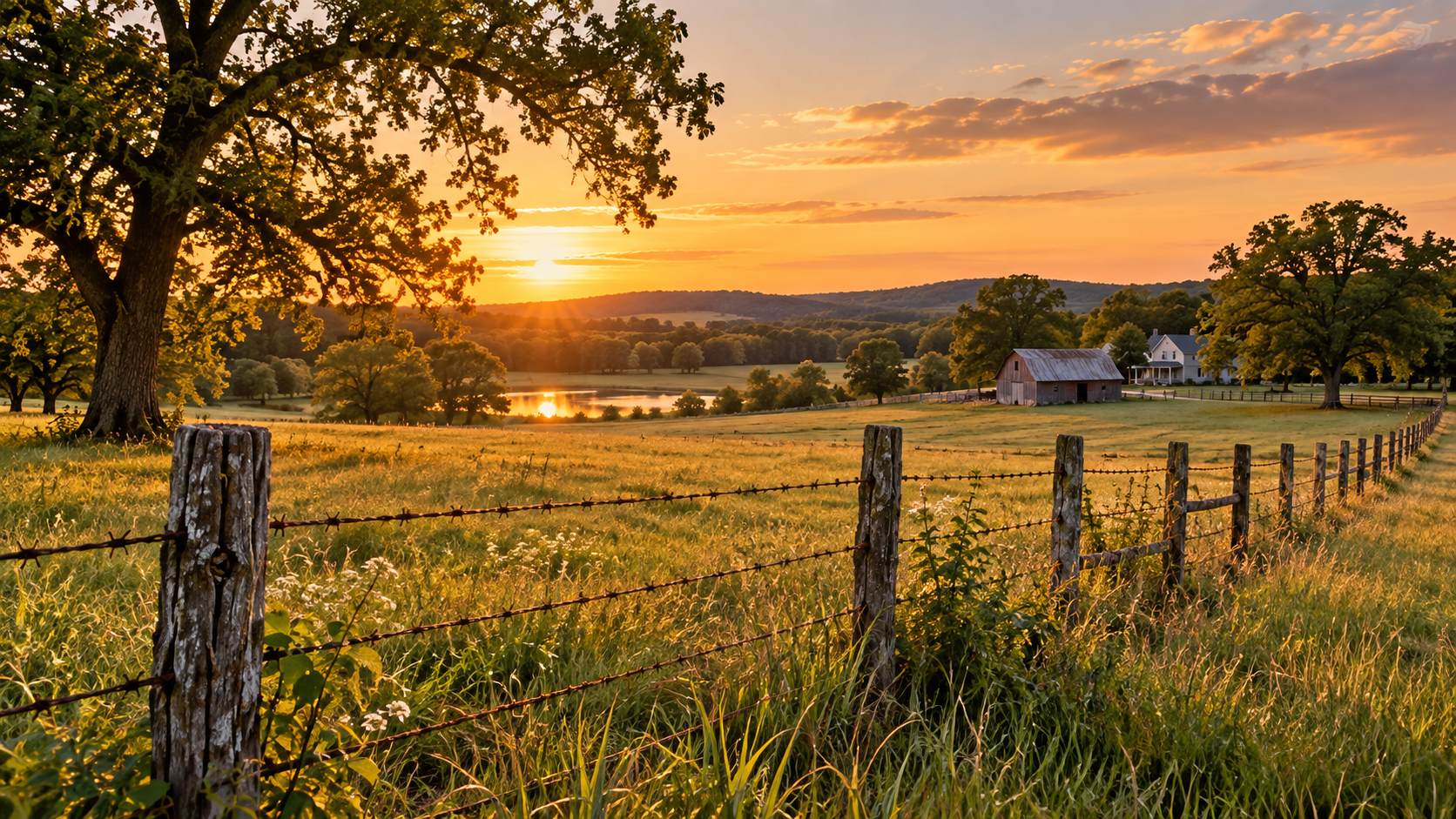
When you walk an acreage property, the boundaries can feel obvious. The pasture ends at an old fence, the neighbor maintains everything on the other side, and everyone says the fence has been there for decades.
So that must be the property line, right?
Not necessarily.
A fence may follow the legal boundary perfectly. It may also sit several feet inside one owner's property, cross the surveyed boundary, or have been installed years ago simply because that location made more sense for livestock, terrain, or access.
For buyers purchasing acreage around Tulsa, Broken Arrow, Bixby, Jenks, Owasso, Coweta, and the surrounding communities, this can matter more than it sounds. If you're planning a shop, barn, horse fencing, another driveway, or future construction, knowing where the property actually ends can be just as important as knowing how many acres you're buying.
Quick Answer: Is a Fence the Property Line in Oklahoma?
A fence is not automatically the legal property line in Oklahoma.
A professional boundary survey uses recorded descriptions, deeds, maps, monuments, field evidence, and other information to determine the record title boundary of a property. Oklahoma's surveying standards require professional surveyors to research and analyze available boundary information and search for controlling corners and other field evidence.
But what happens when the survey and the old fence don't agree?
That's where things can become more complicated.
A survey can identify the record boundary, but a long history of possession or use can sometimes raise separate legal questions.
A good rule to remember is:
A fence is evidence. It is not automatically the answer.
Why Would an Old Fence Not Follow the Property Line?
On rural acreage, fences were not always installed to establish legal ownership boundaries.
A rancher may have simply needed to contain cattle. The actual boundary may have crossed a creek, ravine, wooded area, or rocky ground that made fencing difficult. Someone might have followed a tree line or chosen the easiest route across a pasture instead.
At the time, both neighboring owners may have understood exactly why the fence was there.
Then the properties change hands.
Twenty or thirty years later, the people who knew why the fence was installed are gone. The new owners see an old fence that has apparently been respected for decades and naturally assume, "That's where the property ends."
Oklahoma courts have addressed this distinction.
In McGlothlin v. Livingston, the Oklahoma Court of Civil Appeals considered a long-standing fence that did not follow the surveyed boundary. The court discussed evidence suggesting the fence had been erected to contain cattle rather than establish a property boundary. Under the facts of that case, the court rejected claims involving boundary by acquiescence and adverse possession.
The case illustrates an important point for acreage buyers:
The age of a fence is only part of the story.
Why it was installed and how neighboring owners have historically treated the land can matter too.
The Fence May Not Be the Only Issue
When buyers hear "boundary problem," they often picture an old fence sitting five or ten feet in the wrong place.
But the more important question may be:
What else was built or used based on that assumed boundary?
A gravel driveway might curve onto an adjoining parcel. A detached shop could be closer to the actual boundary than everyone realized. A storage shed might extend across the line. A gate could provide access through land that technically belongs to someone else.
Even landscaping, retaining walls, pasture areas, hunting stands, or utility improvements can become part of the conversation.
On twenty acres, a difference of a few feet may initially sound insignificant.
But what if those few feet contain your driveway?
What if they're exactly where you plan to build a $100,000 shop?
What if you're buying the property for horses and intend to replace hundreds of feet of fencing?
Suddenly, those few feet matter considerably more.
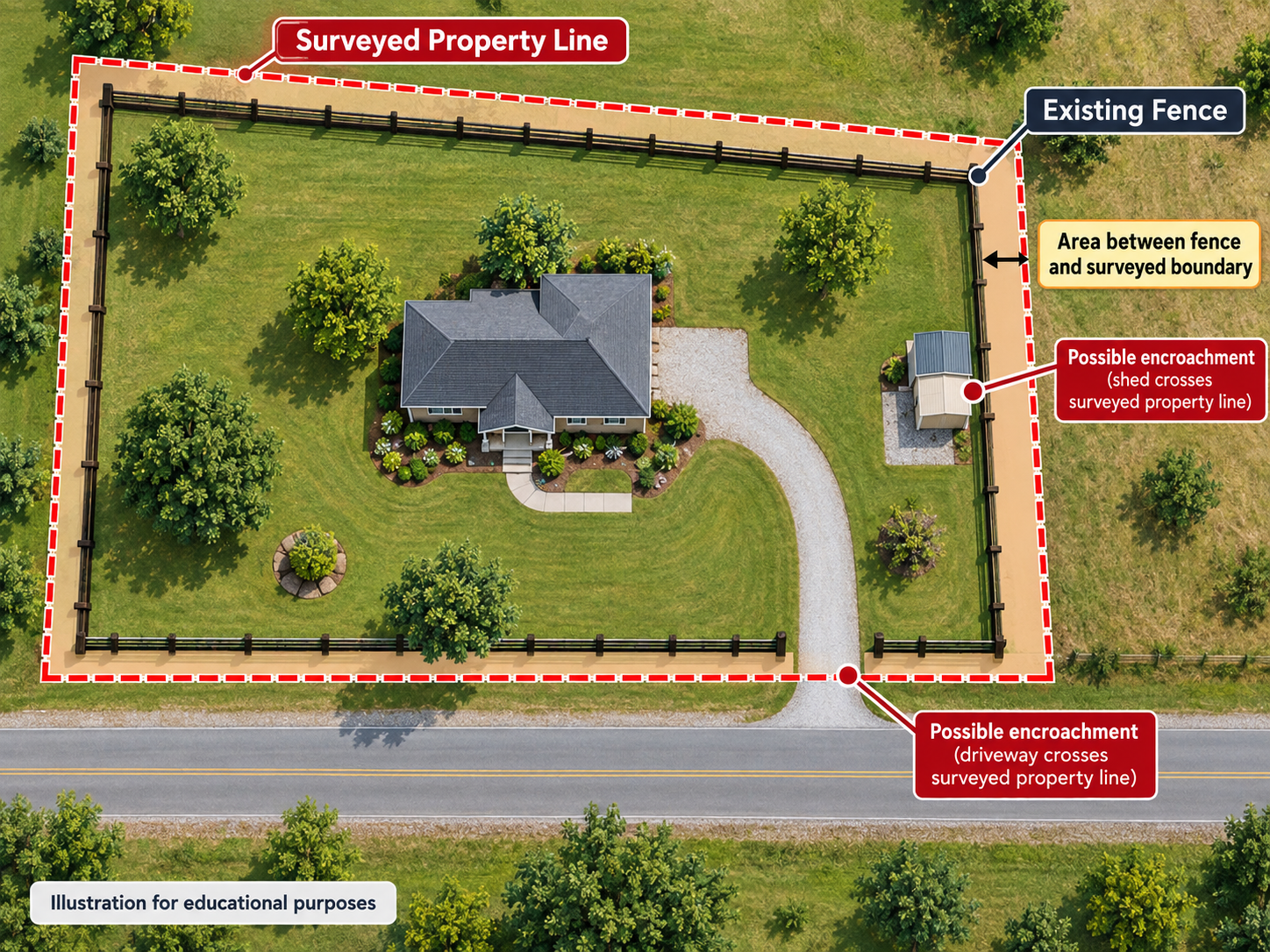
This is one reason I encourage acreage buyers to look beyond the number of acres advertised in a listing. Where those acres are located, how they can be used, and where existing improvements sit can matter just as much as total acreage.
Can You Use GIS Maps or Property Apps to Find the Property Line?
County parcel viewers, satellite maps, Google Maps, and property or hunting apps can be incredibly useful research tools.
They can help you understand the general configuration of a property and sometimes reveal something worth investigating.
If an aerial parcel line appears to cut through a driveway, shop, fence, or barn, that doesn't automatically prove there is a problem.
But it should probably make you ask another question.
What these tools should not do is replace a professional boundary survey when precise location matters.
There is also an important distinction buyers should understand between a boundary survey and a Mortgage Inspection Report.
Oklahoma surveying standards specify that a Mortgage Inspection Report is not a land or boundary survey and should not be relied upon to establish future fence, building, or improvement lines.
That's an important distinction if you're preparing to build something substantial.
If the exact boundary matters to your plans, make sure you understand exactly what type of survey or report you're relying on.
Don't Just Read the Survey. Understand the Property.
If you obtain a boundary survey on acreage, don't let it become another document you glance at before closing and then put in a file.
Compare it with what you actually saw when you walked the land.
Where practical, look at the fence, driveway entrances, gates, barns, sheds, and other improvements in relation to the surveyed boundary.
If something doesn't make sense, ask questions.
This becomes especially important when you're purchasing acreage for a particular purpose. If you're planning a barn, detached workshop, horse fencing, guest house, second driveway, or another major improvement, a boundary discrepancy can affect much larger plans.
The same applies before replacing an old fence.
Building an expensive new fence exactly where the old fence stood could simply preserve an old mistake.
Verify first.
What Happens if the Survey and the Fence Don't Match?
This is one of the more surprising parts of Oklahoma property law.
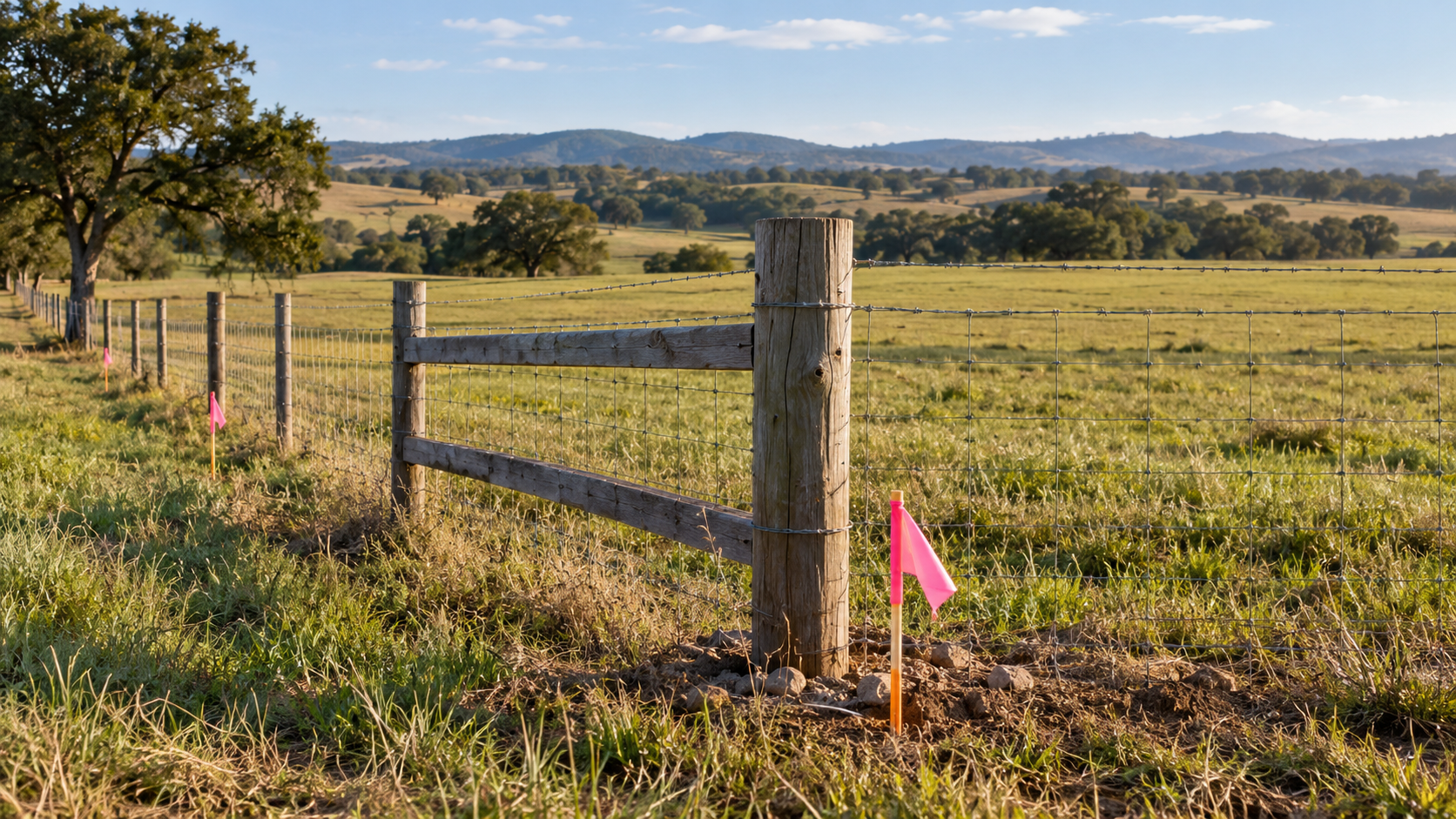
Suppose a survey shows that your record property line extends beyond an existing fence.
Your first reaction might be:
"That's my land. I'll move the fence."
That may be premature.
Oklahoma Statutes Title 4, Section 150.1 specifically addresses circumstances in which a property owner's survey shows the property line crossing an existing boundary or division-line fence.
The statute contains a notice process that can apply before the existing fence is damaged or removed or certain improvements are undertaken. The adjoining property owner must receive the information required by the statute, including the survey.
If the owners do not reach an agreement within the statutory time period, the law provides a process through which a district court action may be filed to establish title to the property at issue.
That is the part many property owners do not expect.
A survey can reveal the record boundary. It doesn't necessarily resolve every legal ownership question created by years of use or occupation.
If a genuine ownership dispute exists, the surveyor, title professionals, and an Oklahoma real estate attorney may each have different roles in determining what happens next.
Finding a discrepancy does not mean you should immediately move the fence or confront the neighbor.
It means you have something worth investigating.
Does a Fence Become the Property Line After 15 Years?
Not automatically.
You've probably heard some version of this:
"That fence has been there for more than 15 years, so that's the property line now."
Oklahoma law does contain a 15-year limitations period that can be relevant to certain actions involving recovery of real property.
But the passage of 15 years alone does not transform every old fence into a new legal boundary.
Adverse possession involves additional legal requirements. Oklahoma courts have examined factors including whether possession was actual, open, notorious, exclusive, continuous, and hostile to the record owner's rights.
Oklahoma also recognizes a doctrine known as boundary by acquiescence in certain circumstances.
Again, neither doctrine creates a simple rule saying an old fence automatically becomes the property line after a certain number of years.
The facts matter.
Who installed the fence? Why was it placed there? Did the owners know where the surveyed boundary was? How was the disputed land used? Was that use permitted? Were there previous agreements between the neighbors?
Those questions can become much more important than simply asking how old the fence is.
So if someone tells you, "It's been fenced that way for 20 years, so the neighbor owns it," there may be something worth investigating.
But the age of the fence alone doesn't answer the question.
Why This Matters Before Buying Tulsa-Area Acreage
The level of investigation that makes sense for a buyer depends partly on what they intend to do with the property.
Someone purchasing acreage primarily for privacy may have different concerns from a buyer planning a horse property, detached shop, barn, second driveway, additional residence, or extensive new fencing.
The Oklahoma Real Estate Commission's land contract includes provisions addressing buyer investigations, title review, and surveys. How those provisions apply depends on the contract and the choices made by the parties.
That's another reason these questions belong in the buying process rather than after closing.
Before purchasing acreage where the boundaries are important to your plans, I would want to investigate:
Is there a current boundary survey?
Does the existing fence appear to follow the surveyed boundary?
Are any driveways, barns, sheds, gates, or other improvements close to the line?
Are easements or other recorded rights affecting the property?
Does your intended use depend on land located close to that boundary?
If the fence and survey disagree, does the issue need additional review before closing?
The goal isn't to turn every old fence into a problem.
It's to understand what you're buying before you start spending money changing it.
Frequently Asked Questions About Oklahoma Property Lines
Is a fence considered the legal property line in Oklahoma?
Not automatically. A fence may sit directly on the record boundary, but its physical location alone does not necessarily establish that. A professional boundary survey can help determine the record title boundary. If historical possession creates competing ownership claims, additional legal review may be appropriate.
How long does a fence have to be there before it becomes the property line?
There isn't a simple rule saying every fence becomes the legal boundary after a particular number of years. Oklahoma's 15-year limitations period can be relevant to certain real-property claims, but the passage of time is not the only factor.
Can I move a fence if a survey says it's on my property?
Don't automatically assume you can. Oklahoma law contains a notice procedure that may apply when a survey shows a property line crossing an existing boundary or division-line fence. If ownership is disputed, obtaining appropriate legal advice before taking action can be important.
Are county GIS maps accurate enough to establish property lines?
They are useful for preliminary research, but they should not replace a professional boundary survey when precise boundary location matters. Use GIS maps to identify questions, not as the sole basis for relocating a fence, constructing a building, or resolving an ownership dispute.
Should I get a survey before buying acreage in Oklahoma?
It deserves serious consideration when your plans depend on knowing precise boundaries. New fencing, barns, shops, driveways, subdivision plans, or construction near the edge of the property can make accurate boundary information especially important.
The Fence Is Part of the Story. It Isn't Always the Answer.
The old fence may be exactly where it belongs.
It may be several feet inside the record boundary. It may have been installed decades ago simply to contain livestock. Or the history of the fence and the way neighboring owners have used the land may raise questions that deserve further investigation.
The point isn't to assume every fence is a problem.
The point is to stop treating an assumption as a fact.
When I'm helping someone evaluate acreage around Tulsa, Broken Arrow, Bixby, Jenks, Owasso, Coweta, and the surrounding communities, I want to know more than the number of acres shown in the listing.
I want to know what you plan to do with them.
If those plans involve horses, a barn, a shop, additional fencing, another driveway, or future construction, the boundaries, access, restrictions, utilities, and physical characteristics of the land all need to work together.
The same principle applies to another common acreage assumption: "No HOA" doesn't necessarily mean "no restrictions." That's why understanding the property before closing matters just as much as finding a property you love.
Because when you're buying acreage, you're not simply buying everything that appears to be inside an old fence.
You're buying a legally described piece of property.
And sometimes, the fence tells only part of the story.
Thinking about buying acreage or land in the Tulsa metro? I can help you look beyond the house and evaluate whether the property fits the way you actually plan to use it.
This article is for general educational purposes only and does not constitute legal, surveying, title, engineering, or financial advice. Property boundaries, adverse possession, boundary by acquiescence, fence rights, and title disputes depend on individual facts and circumstances. Buyers and property owners should consult appropriately licensed Oklahoma professionals when evaluating these issues.
