

Expansive Clay & Foundation Cracking: Why So Many Tulsa Homes Have a Soaker Hose Story
If you are relocating to the Tulsa metro from another part of the country, your first few home tours may introduce you to a very Oklahoma conversation.
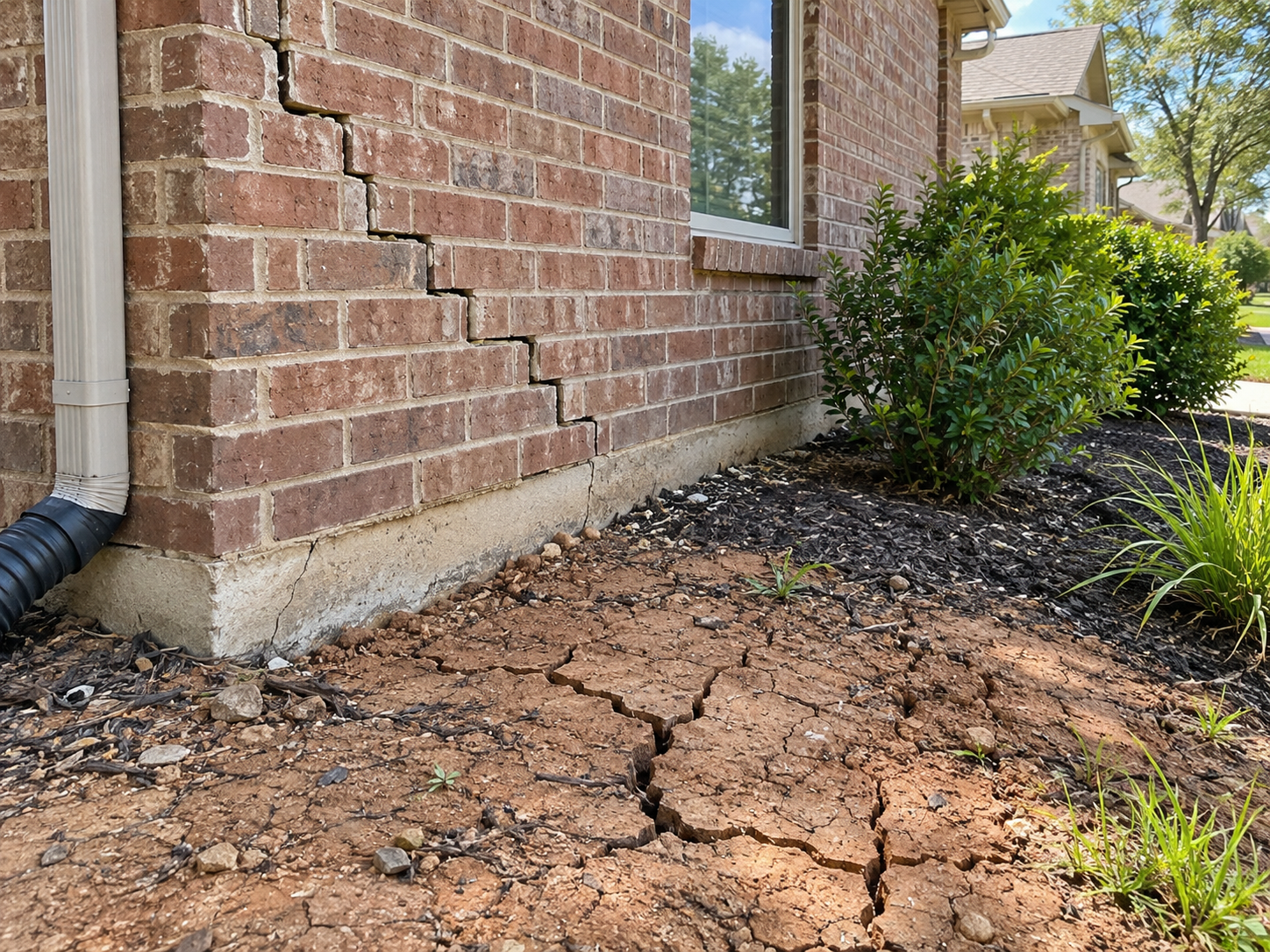
You walk through a beautiful ranch in Midtown Tulsa, a newer home in Broken Arrow, or a custom property in Bixby and notice a thin stair-step crack in the brick mortar. One bedroom door rubs slightly when it closes. Outside, there may even be a black soaker hose winding quietly through the flowerbeds around the house.
For a buyer who has never dealt with Oklahoma soil, those details can immediately raise a much bigger question: Is the foundation moving?
Sometimes there is a genuine structural issue that deserves professional evaluation. Other times, what you are seeing may be connected to something Tulsa homeowners have dealt with for generations: clay-rich soil that changes volume as its moisture content changes.
The City of Tulsa identifies expansive soils as a local natural hazard. In its 2024 Multi-Hazard Mitigation Plan, the City explains that expansive soils can swell when wet, shrink when dry, and contribute to cracking and movement in buildings and infrastructure. Tulsa also identifies sticking doors, uneven floors, and cracks in foundations, floors, walls, ceilings, and windows as possible signs associated with expansive-soil movement.
That is where Tulsa’s famous soaker-hose conversation begins.
Quick Answer: Why Expansive Clay Matters in Tulsa
Certain Oklahoma clay soils expand as they absorb moisture and contract as they dry. The larger concern is often not simply that the soil moves, but that one area beneath a house may move differently from another.
A sunny side of the home may dry rapidly while a shaded side stays moist. A mature tree can influence soil moisture near one corner, while a downspout repeatedly saturates another. Those differences can create uneven support beneath a rigid foundation.
That does not mean every crack equals structural failure, and it does not mean every Tulsa homeowner needs to water around the foundation. The better way to think about it is as a relationship between soil, moisture, drainage, vegetation, and the structure sitting above them.
Oklahoma’s Clay Is Constantly Responding to Moisture
The soil beneath a house is not necessarily as motionless as it appears.
The Oklahoma Geological Survey’s guide to expansive soils explains that clay-rich shales and soils derived from them can contain minerals that change volume significantly as moisture conditions change. The Survey also notes that a large portion of Oklahoma contains geologic formations capable of producing expansive soils.
That does not mean every house in those areas will experience foundation trouble. It means the geologic conditions exist, and the actual performance of a particular home can depend on the soil at that site, the foundation design, drainage, grading, vegetation, construction methods, and moisture history.
The easiest way to picture expansive clay is to think of it as a sponge. During prolonged dry weather, the soil can contract. When moisture returns, it can expand again.
The house sitting above it is not able to flex in the same way.
Tulsa’s hazard plan explains that problems can occur when the soil moves unevenly beneath a structure. Long dry periods can increase shrinkage, while heavy rainfall can cause soils to expand again. That cycle is one reason foundation discussions are so common around Tulsa.
Why Does Uneven Moisture Create Bigger Problems?
The bigger concern is often not that an entire house rises or settles evenly. It is that different parts of the foundation may be experiencing different soil conditions.
Imagine the west side of a house baking in afternoon sun while the east side remains shaded. Add a mature tree near one corner and a downspout that releases roof runoff beside another. Even though all four areas support the same structure, the soil beneath them may be behaving very differently.
That is why I would look at the entire property rather than concentrating only on one crack.
Condition Around the HomeWhat May HappenWhat You Might NoticeProlonged dry soilClay contractsSeasonal cracks or sticking doorsConcentrated roof runoffOne area becomes wetter than the surrounding soilLocalized movement or persistent dampnessPoor gradingWater remains near the structurePonding, erosion or moisture issuesUneven shade or irrigationMoisture varies around the homeDifferent areas of the structure behaving differently
The crack may be what catches your attention, but the water pattern around the house may help explain the story behind it.
The Tulsa Soaker Hose Story
During a particularly hot Oklahoma summer, it is not unusual to see soaker hoses tucked beneath mulch around homes in established Tulsa neighborhoods.
The basic idea is to help prevent perimeter soil from becoming extremely dry during long stretches without rain. Instead of dumping a large amount of water in one location, a soaker hose applies moisture more slowly.
But this is where simple internet advice can become misleading.
There is no universal Tulsa foundation-watering schedule that is appropriate for every house. Soil type, recent rainfall, shade, landscaping, mature trees, irrigation, slope, drainage, and foundation design all matter.
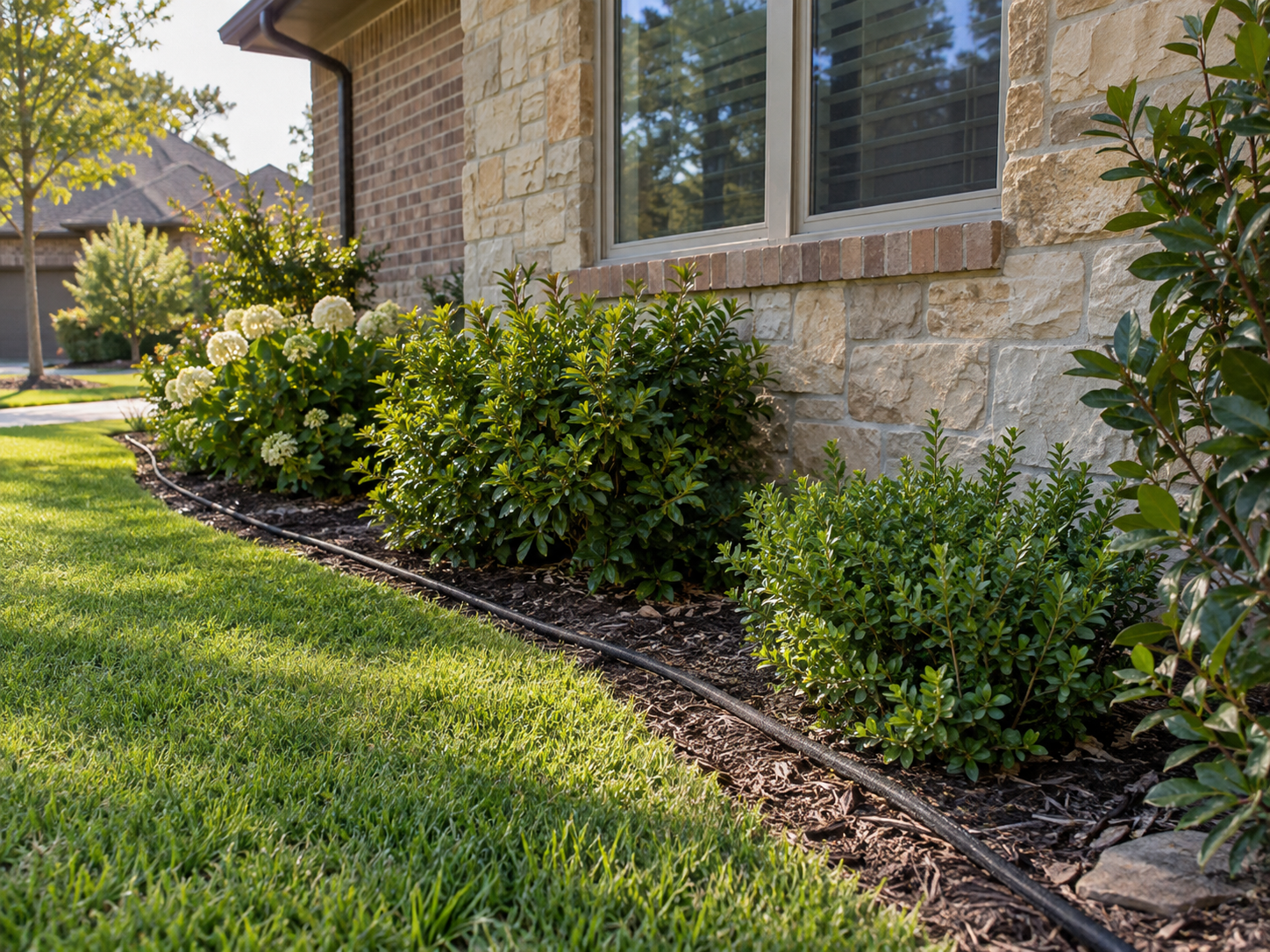
Oklahoma State University Extension’s water conservation guidance recommends adjusting irrigation to actual soil and weather conditions rather than relying on a rigid schedule. With clay soils, applying water slowly can be especially important because water may run off if it is applied faster than the soil can absorb it.
The Oklahoma Geological Survey also notes that excessive moisture from rainfall, irrigation, leaks, or other sources can contribute to swelling in expansive soils.
So the lesson is not simply “more water is better.”
It is better moisture management.
A soaker hose may be one tool a homeowner uses, but it cannot correct poor grading, a plumbing leak, or an existing structural issue.
Is That Normal Movement or a Structural Problem?
When you are walking through a Tulsa home during the inspection period, one crack can suddenly become the only thing you see.
A stair-step line catches your eye in the brick. There is a hairline crack above a doorway. One bedroom door rubs against its frame. Suddenly the conversation shifts from the kitchen and backyard to one much bigger question:
Is this normal movement, or is the foundation actually failing?
The good news is that a crack by itself is not a diagnosis.
The current 2026 Oklahoma Real Estate Commission Residential Sale Contract allows buyers to conduct inspections and investigations during the contract process, including structural inspections by qualified professionals.
That matters because the meaning of a crack depends on much more than how dramatic it looks.
A better way to evaluate what you are seeing is to look for a pattern of evidence.
What You SeeWhat It Could SuggestWhat to Consider NextFine hairline crack with no visible displacementMaterial shrinkage, seasonal movement or minor settlingDocument it and look for other symptomsStair-step crack, recurring crack or sticking doorsPossible differential movementReview drainage, disclosures and repair historySignificant displacement, horizontal cracking, uneven floors or several symptoms togetherGreater reason for structural concernConsider an independent structural evaluation
A small drywall crack by itself may have one explanation. A substantial exterior crack combined with sloping floors and multiple doors that no longer latch is a different conversation.
The presence of a crack is information. It is not a diagnosis.
Crack Width Is Only One Piece of the Puzzle
You will sometimes see online charts claiming that a crack below a certain width is cosmetic while anything wider automatically means structural failure.
I would not use crack width as a pass-or-fail test.
Width is useful information, but a structural professional may also consider the crack’s direction, displacement, location, foundation design, floor elevations, soil conditions, drainage, prior repairs, and whether the crack is actively changing.
A narrow crack that continues to grow may be more important than an older, wider crack that has remained unchanged for years.
The same is true for seasonal movement. A door that rubs slightly during a very dry month and then operates normally later may be telling a different story from several doors becoming permanently out of square.
The better question is not simply, “How wide is the crack?”
It is:
“What is the rest of the house doing around it?”
When Is a Structural Engineer Worth Considering?
Some conditions deserve more investigation than others.
Horizontal foundation or stem-wall cracking can warrant closer attention, particularly when there is visible displacement. Significant stair-step cracking through masonry may also deserve evaluation when the two sides of the crack no longer appear aligned.
Multiple doors or windows that no longer operate properly can be another clue. One sticky door may simply be a door problem. Several doors becoming noticeably out of square in the same part of the house, combined with cracking or floor changes, gives you more context.
Tulsa’s hazard plan specifically identifies uneven floors, sticking doors, and cracks in multiple building components as possible effects associated with expansive-soil movement.
I would also pay attention to gaps between flooring and baseboards, movement around cabinetry or trim, cracks that travel through more than one material, and areas where previous repairs appear to have reopened.
Oklahoma State University Extension notes that shrink-swell soils are common in many areas of Oklahoma and recommends obtaining professional evaluation when there is uncertainty about foundation or wall cracking.
An independent structural engineer can look beyond a single visible crack and evaluate the structure as a whole. Depending on the condition, the recommendation may involve monitoring, drainage correction, moisture management, further investigation, or structural stabilization.
The important part is that the diagnosis should come before the repair method.
Previous Foundation Repair Is Not Automatically a Deal Breaker
A Tulsa home with existing foundation piers or a documented repair history is not automatically a bad purchase.
What matters is why the repair was needed, what work was completed, who recommended it, whether an engineer was involved, and what has happened since.
If I saw evidence of previous stabilization, I would want to review as much documentation as possible. That may include the engineering report, contractor scope of work, pier locations, invoices, warranties, and any subsequent evaluations.
I would also compare those records with the house today.
Have old cracks remained stable? Have they reopened? Are new cracks appearing elsewhere? Are floors reasonably consistent? Are doors and windows functioning normally?
A documented repair history may actually give a buyer more useful information than a house where movement occurred but was never formally evaluated.
Drainage Matters Just as Much as Drought
Foundation conversations in Oklahoma often focus heavily on dry soil, but too much water in the wrong place can matter just as much.
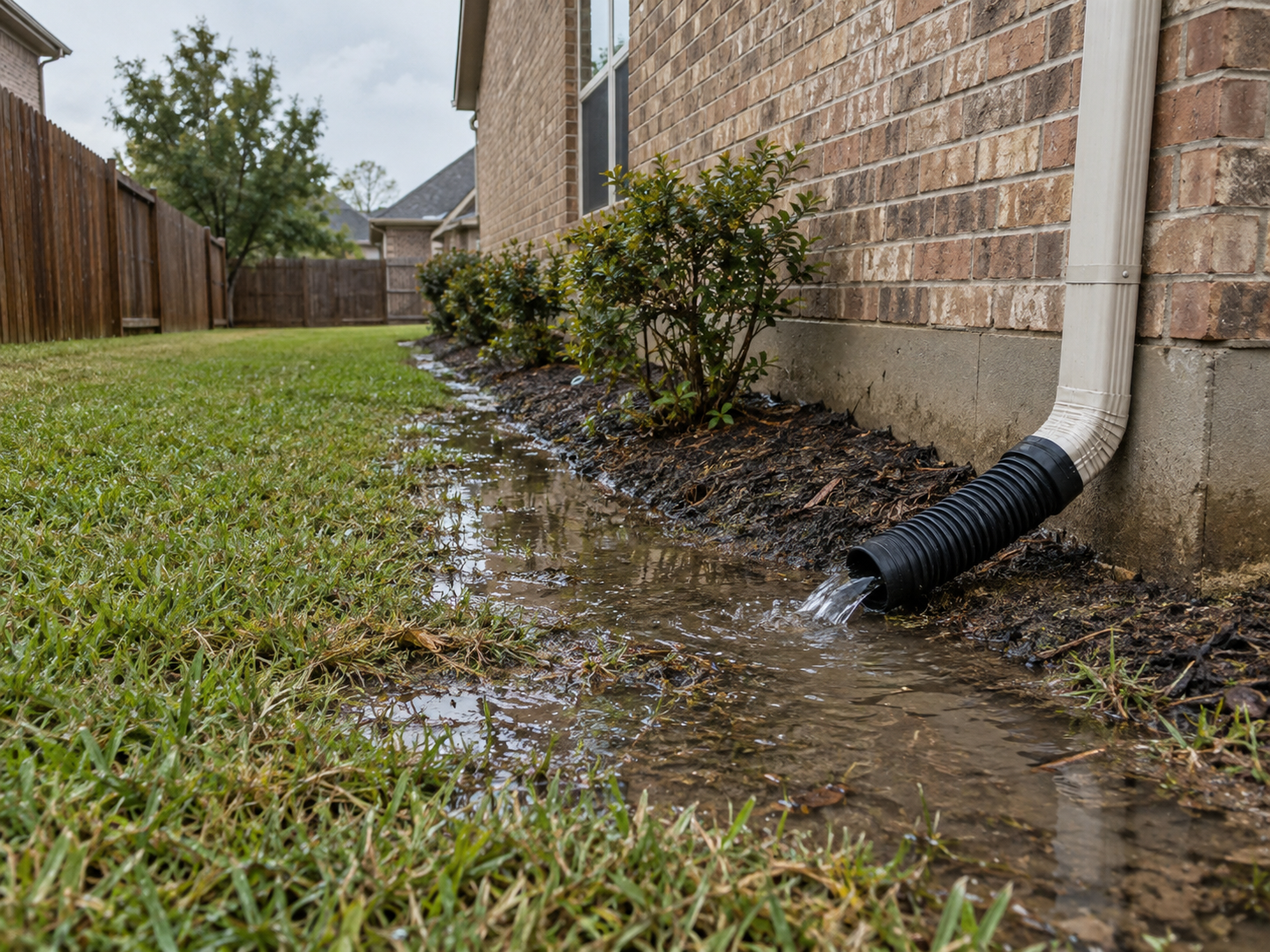
OSU Extension’s residential drainage guidance explains that drainage problems can result from grading, runoff, soil characteristics, and saturated ground. Managing concentrated roof runoff and moving water away from the structure are important parts of residential drainage.
So when I am looking at a Tulsa property, I do not stop at the crack. I want to see what the water is doing around the house.
Where do the gutters discharge? Does the yard slope away from the structure or back toward it? Is soil eroding near one corner? Does water remain beside the slab after a storm? Is one side heavily irrigated while another side is extremely dry?
A soaker hose cannot compensate for poor grading, and adding more water will not solve a downspout repeatedly saturating one corner of the foundation.
Foundation moisture management has two sides: avoiding extreme drying and controlling excess water.
What Should Tulsa Buyers Investigate Before Closing?
Start with the property’s history.
Oklahoma’s Residential Property Condition Disclosure resources give buyers a place to review the seller’s disclosures about known conditions, including foundation-related issues when applicable.
If previous foundation work is disclosed, I would not immediately treat that as a reason to reject the property. I would want more information.
What was repaired? When was the work completed? Was an engineer involved? Were piers or other stabilization methods installed? Is there a warranty? Does the warranty transfer? Has additional movement been documented since the repair?
Then look at the property as a complete system. Evaluate exterior cracking, interior cracking, flooring, doors, windows, grading, gutters, downspouts, large trees, irrigation, drainage, and evidence of previous repairs.
One clue rarely tells the whole story.
Can You Research the Soil Before You Buy?
Yes, at least as a starting point.
The USDA Natural Resources Conservation Service maintains the Web Soil Survey, which allows buyers to identify an area of interest and review mapped soil information for a property or surrounding area.
This can be especially useful when evaluating acreage or land, where soil conditions may matter for much more than the house itself.
The tool can provide soil classifications and engineering interpretations, but it does not replace a site-specific geotechnical or structural evaluation when that level of analysis is needed.
A soil map cannot tell you exactly how a particular foundation was prepared, whether fill was placed decades ago, whether a plumbing leak affected one area, or how previous owners managed drainage.
But it reinforces an important point:
The soil is part of the property too.
Tulsa Foundation FAQs
Does Tulsa really have expansive clay soil?
Yes. Tulsa’s hazard-planning documents identify expansive soils as a local concern, and the Oklahoma Geological Survey documents expansive-soil conditions across large portions of the state.
Should every Tulsa homeowner water the foundation?
No. There is no single watering schedule appropriate for every home. Soil type, recent rainfall, trees, shade, irrigation, grading, drainage, and foundation design all matter.
Does a stair-step crack mean the foundation is failing?
Not necessarily. Crack direction, width, displacement, location, history, and the presence of other symptoms all matter. When multiple concerns appear together, further structural evaluation may be appropriate.
Should I avoid a Tulsa home that has already had foundation repairs?
Not automatically. Previous repairs should be investigated. Review engineering reports, contractor documents, repair locations, warranties, and the current condition of the home.
Is foundation watering or drainage more important?
They are part of the same moisture-management story. Prolonged drying can affect expansive clay, while excessive or concentrated water can create other problems. The goal is not simply more water. It is appropriate and reasonably consistent moisture conditions around the property.
The Tulsa Soaker Hose Story Is Really a Soil Story
A black soaker hose winding through the flowerbed may look like ordinary landscaping equipment, but in Tulsa it can represent something much bigger.
Homes here sit on soil that responds to Oklahoma weather. Long dry periods, heavy rainfall, trees, irrigation, roof runoff, grading, and drainage can all influence moisture conditions around a foundation.
That does not mean every crack is a structural emergency. It does not mean every Tulsa home needs foundation repair, and it certainly does not mean a garden hose can fix an existing structural problem.
It means buyers should look beyond the crack itself and ask why it is there.
When I am helping someone evaluate a home in Tulsa, Broken Arrow, Bixby, Jenks, Owasso, or the surrounding area, I would rather investigate an unusual crack, drainage issue, previous foundation repair, or floor movement before closing than discover that story afterward.
Because sometimes one of the most important parts of the house is not the kitchen, the roof, or the HVAC system everyone can see.
It is the ground underneath it.
